A great steak dinner starts with choosing a cut that suits your preferences, but there’s more to the experience than the steak itself. Marbling, preparation, doneness, and side dishes all influence the final result, and understanding these factors can make a difference when ordering at a restaurant.
From the tenderness of filet mignon to the rich flavor of ribeye, each cut offers a different combination of characteristics that can shape your dining experience.
Understanding the Most Popular Cuts of Steak
Different cuts of beef vary in tenderness, flavor, fat content, and texture. These differences come largely from where the meat is located on the animal and how much the muscles are used.
Filet Mignon
Filet mignon comes from the tenderloin, a muscle that receives relatively little exercise. This gives the steak its exceptionally tender texture.
It’s also relatively lean, with less marbling than cuts such as ribeye. Its mild flavor and soft texture make it particularly appealing to diners who prioritize tenderness.
Ribeye
Ribeye is known for its generous marbling, rich beef flavor, and juicy texture. The fat distributed throughout the meat contributes to its tenderness and distinctive taste, making it a popular choice for diners who prefer a richer steak.
New York Strip
Cut from the short loin, New York strip offers a firmer texture than filet mignon while maintaining good tenderness and a pronounced beef flavor.
It generally has less marbling than ribeye, making it a good middle ground for those who want a substantial steak without as much richness.
Sirloin
Sirloin is a versatile cut known for its beef-forward flavor and relatively lean composition. It typically has a firmer texture than filet mignon or ribeye, although tenderness varies depending on the specific cut.
For diners who enjoy a hearty steak with less fat, sirloin can be an appealing option.
T-Bone
A T-bone steak contains two different cuts separated by a T-shaped bone: strip steak on one side and tenderloin on the other.
This combination provides two distinct textures in a single steak. The strip portion offers a firmer bite and robust flavor, while the tenderloin side is softer and milder.
Porterhouse
A porterhouse is similar to a T-bone but contains a larger portion of tenderloin. Porterhouse steaks are often generously sized, making them appealing to diners who enjoy a substantial portion or want to experience two cuts in one meal.
Delmonico
Unlike cuts with clearly defined anatomical origins, the term Delmonico has been used to describe different steaks throughout its history.
Depending on the restaurant or butcher, it may refer to a ribeye or another thick, premium cut. Because the name doesn’t identify one universally standardized cut, it’s worth asking how a restaurant prepares and serves its Delmonico steak.
What Is Steak Marbling, and Why Does It Matter?
Marbling refers to the small streaks of intramuscular fat distributed throughout a cut of beef. These streaks are especially noticeable in cuts such as ribeye.
As steak cooks, the fat contributes to its richness, juiciness, and overall eating quality. This is one reason two cuts prepared to the same level of doneness can taste and feel noticeably different.
Marbling is also one factor used in USDA beef quality grading. Grades such as Prime and Choice consider the amount of marbling, along with other characteristics of the beef.
However, more marbling doesn’t automatically make a steak the right choice for everyone. Some diners prefer the richness of a ribeye, while others enjoy the leaner texture of a filet or sirloin.
Understanding Steak Doneness
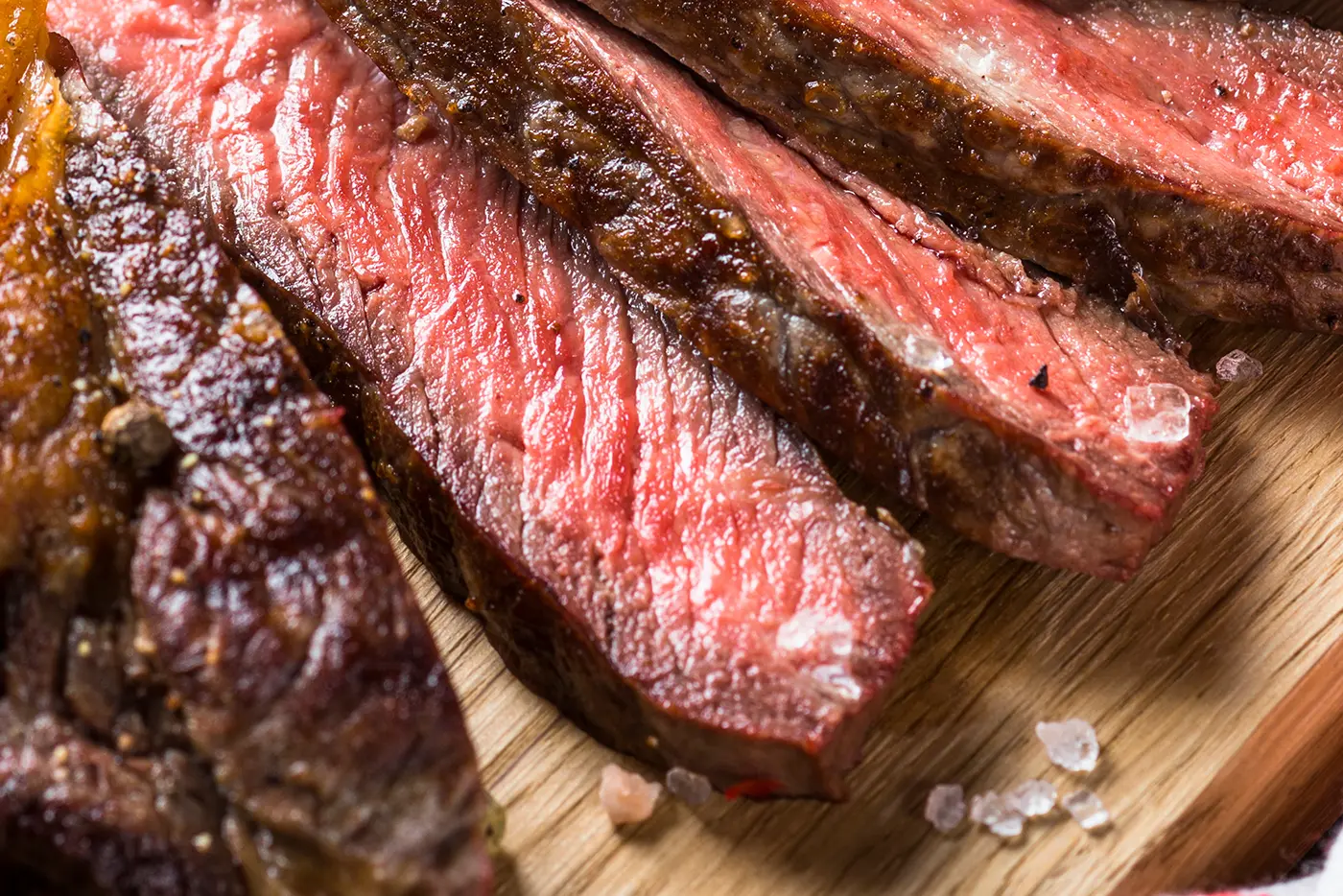
Steak doneness describes how thoroughly the meat has been cooked, influencing its internal temperature, color, moisture, and firmness.
Restaurants commonly offer several levels of doneness:
- Rare: A red center with a very soft texture and minimal cooking throughout.
- Medium rare: A warm red center with a tender, juicy texture.
- Medium: A pink center with a slightly firmer texture.
- Medium well: A mostly cooked center with a small amount of pink and a firmer bite.
- Well done: Cooked throughout, with little to no pink and a firm texture.
The ideal level of doneness depends on personal preference and the cut being prepared.
For example, a well-marbled ribeye may benefit from sufficient heat to soften some of its fat, while a leaner filet can become firmer as its internal temperature increases.
Thickness also matters. A thick porterhouse requires a different approach than a smaller filet to achieve the desired internal temperature without overcooking the exterior.
When ordering a steak at a restaurant, consider both the cut and your preferred texture. If you’re uncertain, your server may be able to offer guidance.
For food safety, the USDA recommends cooking whole cuts of beef to an internal temperature of 145ºF followed by a three-minute rest. Restaurant doneness preferences may involve lower temperatures.
How Cooking Methods Affect Steak
The way steak is cooked influences its exterior, internal texture, and overall flavor. Different methods can produce distinct results, even when using the same cut.
Grilling
Grilling exposes steak to heat from below, creating a browned exterior and, depending on the fuel and equipment, smoky or charred flavors.
Pan-Searing
Pan-searing uses direct contact with a heated cooking surface to create an evenly browned crust.
This method allows for close control over the cooking process and is sometimes paired with butter, herbs, or aromatics to introduce additional flavor.
Broiling
Broiling uses intense heat from above to develop a browned exterior. Cooking times depend on the steak’s thickness and its distance from the heat source.
Resting After Cooking
Regardless of the cooking method, resting is an important final step.
Allowing steak to rest briefly helps reduce the amount of moisture lost when it’s cut. The steak’s internal temperature may also continue to rise slightly after it leaves the heat.
Choosing Sides and Sauces That Complement Steak
A well-rounded steak dinner considers the flavors and textures of the entire plate.
Rich cuts of beef often pair well with lighter sides, while leaner steaks can benefit from sauces that add moisture and richness.
Potatoes are a familiar pairing because their mild flavor complements beef without competing with it. Mashed or roasted preparations also provide a satisfying contrast in texture.
Vegetables introduce freshness, color, and variety. Seasonal selections can also help balance a rich main course.
Sauces offer another way to customize the meal. Buttery sauces can complement leaner cuts, while herb-forward or tangy options may provide contrast to more heavily marbled steaks.
Popular options include:
- Hollandaise: A rich, buttery sauce with a subtle tang.
- Italian salsa verde: A bright, herb-based sauce that can balance the richness of beef.
- Traditional steak sauce: A savory, tangy option that adds a more pronounced flavor.
- Sautéed mushrooms: An earthy accompaniment that pairs naturally with steak.
The goal isn’t necessarily to add as many flavors as possible. A few well-chosen sides and sauces can enhance the steak while allowing its natural characteristics to remain the focus.
Enjoy a Steak Dinner at Greystone Public House
For those looking for a steak dinner in Harrisburg, PA, Greystone Public House offers several cuts as part of its dinner menu.
Available after 4:30 PM, Greystone’s steak selections include:
- 8 oz Filet Mignon: A tender, lean cut with a mild beef flavor.
- 16 oz Delmonico: A generously portioned steak for diners interested in a heartier selection.
- Bistecca alla Fiorentina: A 20 oz porterhouse combining tenderloin and strip steak.
Each steak is served with whipped Yukon Gold potatoes, seasonal vegetables, hollandaise, Italian salsa verde, and traditional steak sauce. Sautéed mushrooms are also available for an additional charge.
Greystone’s main menu also includes appetizers, additional entrées, and other dining options, making it easy to accommodate different tastes when dining with a group.
Planning your next steak dinner in Harrisburg? Browse Greystone Public House’s dinner menu and make plans to visit.